
Is India Ready for a Full-Scale War?
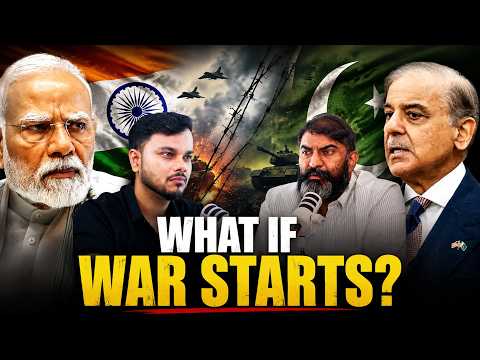
If war broke out tomorrow, against Pakistan, against China, or as part of a wider global conflict, how prepared is India, really?
That is the question Samar Toor took on in a recent conversation on Accompany Akki, and his answer offers a far more grounded picture than the usual headlines.
Restraint, not aggression, is the strategy Samar's central argument is that the most responsible approach during a potential World War is to avoid it, not provoke it. India holds nuclear weapons as a deterrent, to stop others from forcing a war upon it, not as an invitation to start one.
A serious fighter, he explains, stays calm until the last possible moment and saves the strongest response for the worst moment.
That, in his view, should define India's posture on the world stage. Where India's capability stands today On hard capability, the assessment is confident.
India's directed energy weapons program and ICBM development are both progressing well. Air defense systems like Akash and Akash Teer, along with BrahMos, continue to perform strongly, while indigenous drones and weapon systems are increasingly in global demand.
Samar frames this against a blunt economic truth: food, pharma, and weapons are three businesses that never fail, because people always need to eat, get treated, and unfortunately, fight.
That demand is part of why India is becoming the world's fourth largest military power.
The China border: geography as defense One of the most compelling parts of the conversation covers the India-China border itself, terrain with no agriculture, barely any oxygen, and cold severe enough to cause hypothermia.
Maneuverability is extremely limited, forcing movement along narrow roads flanked by ravines and cliffs.
Samar's point is that this landscape makes any occupation temporary, since holding ground here for long is nearly impossible for either side.
Pakistan's deeper problem may be internal On Pakistan, Samar is direct about a country facing instability from within: unrest in Balochistan and Khyber Pakhtunkhwa, persecution of Ahmadi and Shia communities, political dysfunction, and an economy that never recovered from demonetization's blow to its counterfeit currency networks.
His prediction is stark, that Pakistan may become the next Ukraine, with internal resistance posing a bigger threat to its stability than any external war.
Watch the full conversation with Samar Toor here
More from the blog


Subscribe to our newsletter
The best new roles, resources and must-watch episodes — in your inbox every week. No spam, unsubscribe anytime.
