
The EMI Trap: Why Zero Cost Loans Cost You Your Retirement
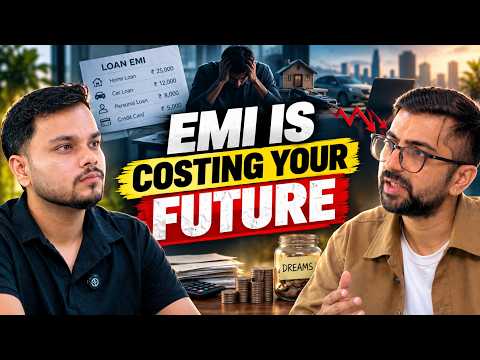
The loan nobody will give you
Banks will lend you money for almost anything: a car, a vacation, a phone, a wedding.
Ask for a loan to fund your retirement, and you will get laughed out of the branch.
That contrast is the core of a recent conversation between Akash Kumar and Neeraj Arora on Accompany Akki.
It reframes why the EMI culture sweeping Indian consumption habits is so dangerous.
Zero cost EMI is not zero cost
"Zero cost" and "no cost" EMI offers look harmless one at a time.
The real cost shows up when several of them stack up across a phone, a laptop, a vacation, and a wedding gift, all running simultaneously.
Neeraj's framing is direct: the cost is your mental health, your financial health, and ultimately your retirement, none of which show up on the EMI paperwork.
A debt free philosophy, built on two exceptions
Neeraj describes himself as completely debt free, having taken a loan only twice
Once for his first car, when mobility was a genuine operational need, and once for a home, which he calls a financially sound decision given low interest rates and the absence of prepayment penalties.
Every other purchase since, including multiple cars and phones, has been paid for outright.
The two to three day rule
The single most actionable idea from the conversation: before any unplanned purchase, wait two to three days.
Neeraj estimates this eliminates 50 to 90 percent of impulse buying, since the initial urgency and FOMO fade with even a small delay.
He references an app reportedly built in South Korea that lets users go through the motions of buying something, cart to checkout, without an actual purchase ever completing, purely to satisfy the psychological urge.
Cash over UPI, and auditing delivery apps
Reducing UPI usage in favor of cash reintroduces a felt sense of loss that digital payments remove, which research shows curbs overspending.
Alongside that, actually reviewing spending on apps like Blinkit, Zomato, and Swiggy over a period of time reveals how much small, frequent purchases quietly add up.
Not a case for austerity
Neeraj is clear that this is not about depriving yourself.
A planned purchase that genuinely adds value, made without FOMO or comparison to a neighbor or influencer, is a legitimate one.
The issue is impulse and comparison driven spending, not spending itself.
Awareness precedes change
The episode closes on two ideas. Neeraj's own: awareness precedes change, which is why he recommends reviewing six months of income and expenses as a first step.
And one he attributes to Sachin Bansal, co-founder of Flipkart:
You cannot manage what you cannot measure.
Full Conversation with Neeraj Arora-
More from the blog



Subscribe to our newsletter
The best new roles, resources and must-watch episodes — in your inbox every week. No spam, unsubscribe anytime.
