
Operation Sindoor Explained: How India's Defense Freedom Changed the Game
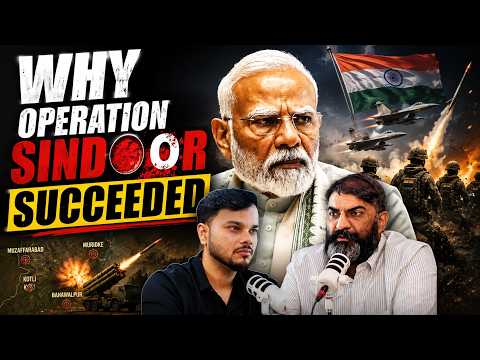
Every conversation about India's defense progress since 2014 tends to start with hardware.
New systems, new platforms, steady modernization across the board. It is an easy story to tell because it is visible: induction ceremonies, defense expo showcases, procurement announcements.
But hardware was never the real story. The real shift has been operational freedom, and Operation Sindoor is the clearest proof of it yet.
A Military That Waited, and One That Doesn't
For years, India's armed forces operated with real capability but limited authority to use it decisively.
Responses to provocation moved through layers of political clearance, and by the time authorization came through, the window for a meaningful deterrent had often closed.
What changed over the last decade is that the military was gradually given room to act on its own operational judgment rather than waiting for a green light on every tactical decision.
That shift is what turned Operation Sindoor from a possible response into an actual one.
What Triggered the Operation
Operation Sindoor followed the terror attack in Baisaran Valley, Pahalgam, an assault that once again put civilians directly in the path of cross-border terrorism.
In an earlier era, the response to an attack like this might have stayed largely rhetorical: official statements, diplomatic protests, a promise of a "befitting reply" that never moved much beyond words.
This time, it didn't stay rhetorical.
Inside the Response
Within days, terror launchpads across the border were destroyed, reportedly eleven to thirteen markaz hit in a coordinated push.
Major Pakistani airfields were struck. Pakistan Air Force jets, including the JF-17 Thunder, were brought down.
The tools used tell their own story about how far India's operational capability has come.
BrahMos missile systems were launched. Drone strikes were coordinated through control display units, enabling precision targeting that simply wasn't available to earlier generations of the armed forces.
This was not a symbolic strike. It was a sustained operation aimed at degrading terror infrastructure at its source.
A line that has functioned as political rhetoric for years, about pursuing threats into enemy territory, stopped being a talking point.
It became a literal description of what happened on the ground.
What Happened on the Other Side of the Border
One of the more revealing details to emerge after the strikes had nothing to do with India directly. It was about how Pakistan's own military responded.
Pakistani army officials were seen attending funerals for the terrorists killed in the operation, standing visibly in a show of solidarity. Read one way, this looks like grief. Read more carefully, it looks like damage control.
Had Pakistan's military leadership stayed away from those funerals, the backlash from hardline elements within their own borders could have turned inward, toward the army itself. Attendance wasn't really about sympathy. It was a calculated move to avoid becoming the next target of the extremism the state has long been accused of tolerating rather than confronting.
The Political Debate at Home
Back in India, the operation drew its share of domestic criticism. Opposition parties argued that the government's framing of the response amounted to shifting responsibility onto the military rather than owning the decision directly, calling it an attempt to "brush off responsibility."
The counterpoint raised in response to this criticism is worth sitting with: if political leadership believes these calls should be made by elected officials in real time, the harder question is what that would actually look like in practice, right down to who is deployed where.
Rhetorical accountability is easy to offer. Operational accountability, deciding who makes split-second calls on live threats, is a much harder standard to meet.
Why This Matters Beyond One Operation
It would be easy to treat Operation Sindoor as an isolated event, a strong response to a specific attack, filed away once the news cycle moves on.
The more useful way to read it is as a pattern. Newspapers today report near-daily encounters. Reports periodically surface of large numbers of terrorists neutralized in single operations.
This frequency is not accidental. It is the visible output of a military that has been given the latitude to act rather than wait.
That is the real change since 2014. Not just what the Indian military has access to, but what it has finally been trusted to do with it.
The Takeaway
Operation Sindoor will likely be remembered for its scale and precision.
Its more lasting significance may be in what it confirms about the direction of India's defense posture over the past decade: fewer bottlenecks, faster decisions, and an institution trusted to execute rather than instructed at every step.
Full Conversation-
More from the blog



Subscribe to our newsletter
The best new roles, resources and must-watch episodes — in your inbox every week. No spam, unsubscribe anytime.
